

Showing posts with label Writing. Show all posts
Showing posts with label Writing. Show all posts
Saturday, December 8, 2007
AUTHOR, BETTY SMITH
BIOGRAPHY OF BETTY SMITH, AUTHOR
OF MY FAVORITE BOOK, "A TREE GROWS IN BROOKLYN"
Welcome to the life of Betty Smith. No published biography has been written about her. I have posted my research here on the internet so that everyone can have access to information about her life. I hope some day someone will take this beginning and make it into a full biography.
In a way, A Tree Grows in Brooklyn itself is Betty Smith's biography. When reporters asked her, as they often did, whether the book was "true," she had a stock answer: she said it was "not as it was, but as it should have been." I never realized the significance of this statement until an AP high school student (J. Zeise) wrote to me and said that she looked up the word "true" in the dictionary and one of the definitions was "such as it should be." Smith couldn't tell the reporters that the book was true because she was being sued by relatives, so instead she found a different way to say that it - she herself probably went to the dictionary, found the definition, and had a good laugh every time she used it with reporters.
That is not to say that all of the details are true - she changed the ethnicity of her family from German to Irish (because she published the book during WWII) and made other changes. But the details are a "slice of life" that accurately portrays the sort of life that many American immigrants had during the early 20th century.
About this Dissertation
Betty Smith published the American novel A Tree Grows in Brooklyn in 1943. I wrote this dissertation for The City University of New York Graduate Center in 1994. In the intervening 50 years, few people have researched Smith, although many are interested in her life and her work. I am publishing this dissertation online so that more people can learn more about Betty Smith and perhaps carry this work further.
To do the research for the dissertation, I spent quite a bit of time at the archives of the University of North Carolina at Chapel Hill. That is where Betty Smith, who grew up in Williamsburg, Brooklyn, moved to, and that is where she wrote her best-selling novel. I also interviewed her daughter and others who knew her.
Since I wrote this dissertation at a time when digital media was not widely used, I did not collect images while I was doing the research. However, since then some readers have sent me images and I will include three here that will give you a fairly good idea of what she was like:
The organization of this site is not chronological. - the biographical and publishing material are separated, so it cannot be read like a narrative. The part of this website that most people will be interested in is the Biography. This part of the site is split into the years of her life. Other than the biography, the main chapters of this dissertation are as follows:
Publication of A Tree Grows in Brooklyn in 1943: An account of Betty Smith's interaction with Elizabeth Lawrence at Harper & Brothers, describing how the novel was edited and changed.
Literary Context in American Literature: The place of A Tree Grows in Brooklyn in the canon of American Literature with critical dialogues regarding women's and working-class literature.
Tomorrow Will Be Better, Maggie Now, and Joy in the Morning:Smith's three novels written after A Tree Grows in Brooklyn, none of which achieved critical acclaim (although Joy in the Morning was made into a movie).
Bibliography, citing works and sources.
Carol Siri Johnson © 2003
Contact: carol@ringwoodmanor.com

Friday, December 7, 2007
WRITING
Reasons why the English language is so hard to learn:
1) The bandage was wound around the wound.
2) The farm was used to produce produce.
3) The dump was so full that it had to refuse more refuse.
4) We must polish the Polish furniture.
5) He could lead if he would get the lead out.
6) The soldier decided to desert his dessert in the desert.
7) Since there is no time like the present, he thought it was time to present the present.
8) A bass was painted on the head of the bass drum.
9) When shot at, the dove dove into the bushes.
10) I did not object to the object.
11) The insurance was invalid for the invalid.
12) There was a row among the oarsmen about how to row.
13) They were too close to the door to close it.
14) The buck does funny things when the does are present.
15) A seamstress and a sewer fell down into a sewer line.
16) To help with planting, the farmer taught his sow to sow.
17) The wind was too strong to wind the sail.
18) After a number of injections my jaw got number.
19) Upon seeing the tear in the painting I shed a tear.
20) I had to subject the subject to a series of tests.
21) How can I intimate this to my most intimate friend?
Let's face it - English is a crazy language.
There is no egg in eggplant, nor ham in hamburger;
Neither apple nor pine in pineapple.
English muffins weren't invented in England or
French fries in France.
Sweetmeats are candies while sweetbreads, which aren't sweet, are meat.
We take English for granted. But if we explore its paradoxes, we find that:
-quicksand can work slowly,
-boxing rings are square and
-a guinea pig is neither from Guinea nor is it a pig,
-writers write but fingers don't fing, and
-grocers don't groce and hammers don't ham?
If the plural of tooth is teeth, why isn't the plural of booth beeth?
One goose, 2 geese. So one moose, 2 meese?
One index, 2 indices?
Doesn't it seem crazy that you can make amends but not one amend.
If you have a bunch of odds and ends and get rid of all but one of them, what do you call it?
If teachers taught, why didn't preachers praught?
If a vegetarian eats vegetables, what does a humanitarian eat?
Sometimes I think all the English speakers should be committed to an asylum for the verbally insane. In what language do people:
-recite at a play and play a recital
-ship by truck and send cargo by ship, and
-have noses that run and feet that smell?
How can a slim chance and a fat chance be the same, while a wise man and a wise guy are opposites?
You have to marvel at the unique lunacy of a language in which:
-your house can burn up as it burns down,
-you fill in a form by filling it out, and
-an alarm goes off by going on.
English was invented by people, not computers.
It reflects the creativity of the human race, which, of course, is not a race at all.
That is why, when the stars are out, they are visible, but when the lights are out, they are invisible. And finally, why doesn't "buick" rhyme with "quick"?
Reasons why the English language is so hard to learn:
1) The bandage was wound around the wound.
2) The farm was used to produce produce.
3) The dump was so full that it had to refuse more refuse.
4) We must polish the Polish furniture.
5) He could lead if he would get the lead out.
6) The soldier decided to desert his dessert in the desert.
7) Since there is no time like the present, he thought it was time to present the present.
8) A bass was painted on the head of the bass drum.
9) When shot at, the dove dove into the bushes.
10) I did not object to the object.
11) The insurance was invalid for the invalid.
12) There was a row among the oarsmen about how to row.
13) They were too close to the door to close it.
14) The buck does funny things when the does are present.
15) A seamstress and a sewer fell down into a sewer line.
16) To help with planting, the farmer taught his sow to sow.
17) The wind was too strong to wind the sail.
18) After a number of injections my jaw got number.
19) Upon seeing the tear in the painting I shed a tear.
20) I had to subject the subject to a series of tests.
21) How can I intimate this to my most intimate friend?
Let's face it - English is a crazy language.
There is no egg in eggplant, nor ham in hamburger;
Neither apple nor pine in pineapple.
English muffins weren't invented in England or
French fries in France.
Sweetmeats are candies while sweetbreads, which aren't sweet, are meat.
We take English for granted. But if we explore its paradoxes, we find that:
-quicksand can work slowly,
-boxing rings are square and
-a guinea pig is neither from Guinea nor is it a pig,
-writers write but fingers don't fing, and
-grocers don't groce and hammers don't ham?
If the plural of tooth is teeth, why isn't the plural of booth beeth?
One goose, 2 geese. So one moose, 2 meese?
One index, 2 indices?
Doesn't it seem crazy that you can make amends but not one amend.
If you have a bunch of odds and ends and get rid of all but one of them, what do you call it?
If teachers taught, why didn't preachers praught?
If a vegetarian eats vegetables, what does a humanitarian eat?
Sometimes I think all the English speakers should be committed to an asylum for the verbally insane. In what language do people:
-recite at a play and play a recital
-ship by truck and send cargo by ship, and
-have noses that run and feet that smell?
How can a slim chance and a fat chance be the same, while a wise man and a wise guy are opposites?
You have to marvel at the unique lunacy of a language in which:
-your house can burn up as it burns down,
-you fill in a form by filling it out, and
-an alarm goes off by going on.
English was invented by people, not computers.
It reflects the creativity of the human race, which, of course, is not a race at all.
That is why, when the stars are out, they are visible, but when the lights are out, they are invisible. And finally, why doesn't "buick" rhyme with "quick"?
Thursday, December 6, 2007
THE WADDODLES OF HOLLOW LAKE OVERVIEW

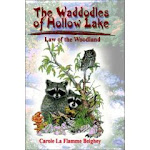
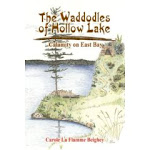
The Waddodles of Hollow Lake
A series of books about a widowed raccoon mother who courageously raises her family alone on a lake in The Great Northern Wood.
A series of books about a widowed raccoon mother who courageously raises her family alone on a lake in The Great Northern Wood.
“Harriet cradled her twin sons in her arms, thinking of her husband, Theodore, battling the blizzard cold and alone. Petrified, they waited for him to return, praying he could find enough food to keep them among the ‘Survival of the Fittest’…for one more day.”
The death of a parent can devastate a child. I know. My four children (ages two-eleven years) experienced this devastation when they lost their father in December of 1968.
We were stranded in a blizzard, the day after Christmas, in an unfinished house with little money when my husband died. Anxious how we would manage without him, too young to understand, the children asked, “Why my daddy?”
Feeling lost and alone, our hopes and dreams shattered, I struggled to find a way to explain his death to them. How could I make them understand? Comfort them? Make them realize he was gone forever? How would I reassure them life would go on; that we would find the courage to live without him…that they would be happy again? I searched for books to help them adjust, and found few. So I began writing one…for them …for me…for the countless suffering children who lost a parent.
Children need help to understand their sorrow. When they read the series The Waddodles of Hollow Lake and understand how well the Waddodles cope with Theodore’s death, they will feel encouraged and know they are not alone. With faith restored, hope renewed, they will know they can endure their devastating sorrow; that they will feel happy again.
We spent the summer following my husband’s death at my brother’s humble cabin on Hubbard Lake in the Michigan Great Northern Wood. Every night we watched a young raccoon mother and her babies feeding at our stump. My children related to the fatherless raccoon family; watching them cope made it easier for them to accept their own loss. This inspired me to write my series through the eyes of animals instead of humans, thus The Waddodles of Hollow Lake was born.
In many ways Harriet Waddodle is me; my children are her children. Through the series of books the Waddodle children learn to adjust to their loss, relocate to a faraway home, change their lifestyle, make new friends and cope with family problems as many children experience, even welcoming a new father and more babies into their lives.
“Cradled in Harriet’s arms during the blizzard, Theodore Waddodle gave up his earthly life and passed into eternity. Before he died he made Harriet promise to, ‘Always look forward, Never behind.’”
Over the years, after working as a registered professional nurse and raising six children, the Waddodle stories evolved into a series. Because death is a depressing subject and difficult for children to deal with, I felt the need to address this subject knowing many children face this problem daily.
Though The Waddodles of Hollow Lake: Law of the Woodland may stimulate feelings of sorrow when a parent dies, humor is interwoven throughout the series. The stories are upbeat, warm, amusing, moral, adventurous …even mysterious. Many characters have endearing, humorous personalities.
The Waddodles and their friends are real to me. They behave like animals but reason like humans. Children will laugh and cry along with the Waddodles sharing the family’s good times and bad.
I hope all who read these books will enjoy them as
much as I enjoyed writing them. Thank you…and ‘Always look forward, Never behind.’
Carole La Flamme Beighey February 2002
The death of a parent can devastate a child. I know. My four children (ages two-eleven years) experienced this devastation when they lost their father in December of 1968.
We were stranded in a blizzard, the day after Christmas, in an unfinished house with little money when my husband died. Anxious how we would manage without him, too young to understand, the children asked, “Why my daddy?”
Feeling lost and alone, our hopes and dreams shattered, I struggled to find a way to explain his death to them. How could I make them understand? Comfort them? Make them realize he was gone forever? How would I reassure them life would go on; that we would find the courage to live without him…that they would be happy again? I searched for books to help them adjust, and found few. So I began writing one…for them …for me…for the countless suffering children who lost a parent.
Children need help to understand their sorrow. When they read the series The Waddodles of Hollow Lake and understand how well the Waddodles cope with Theodore’s death, they will feel encouraged and know they are not alone. With faith restored, hope renewed, they will know they can endure their devastating sorrow; that they will feel happy again.
We spent the summer following my husband’s death at my brother’s humble cabin on Hubbard Lake in the Michigan Great Northern Wood. Every night we watched a young raccoon mother and her babies feeding at our stump. My children related to the fatherless raccoon family; watching them cope made it easier for them to accept their own loss. This inspired me to write my series through the eyes of animals instead of humans, thus The Waddodles of Hollow Lake was born.
In many ways Harriet Waddodle is me; my children are her children. Through the series of books the Waddodle children learn to adjust to their loss, relocate to a faraway home, change their lifestyle, make new friends and cope with family problems as many children experience, even welcoming a new father and more babies into their lives.
“Cradled in Harriet’s arms during the blizzard, Theodore Waddodle gave up his earthly life and passed into eternity. Before he died he made Harriet promise to, ‘Always look forward, Never behind.’”
Over the years, after working as a registered professional nurse and raising six children, the Waddodle stories evolved into a series. Because death is a depressing subject and difficult for children to deal with, I felt the need to address this subject knowing many children face this problem daily.
Though The Waddodles of Hollow Lake: Law of the Woodland may stimulate feelings of sorrow when a parent dies, humor is interwoven throughout the series. The stories are upbeat, warm, amusing, moral, adventurous …even mysterious. Many characters have endearing, humorous personalities.
The Waddodles and their friends are real to me. They behave like animals but reason like humans. Children will laugh and cry along with the Waddodles sharing the family’s good times and bad.
I hope all who read these books will enjoy them as
much as I enjoyed writing them. Thank you…and ‘Always look forward, Never behind.’
Carole La Flamme Beighey February 2002
FOLLOW YOUR DREAMS

POSTED BY LARRY BEIGHEY FROM HIS BOOK, "A DROP IN THE BUCKET."
Follow Your Dreams
My wife is a remarkable person. What she has accomplished at this point in her life makes any of my accomplishments pale in comparison.
Her first husband died the day after Christmas, leaving her with four children, ages two to nine. She was 30! Besides her own grief, she still had to cope with explaining the loss of their father to these four small children. They just couldn’t understand what had happened to their father. When was he coming back?
While vacationing at her brother’s lake cabin in Michigan’s northern woods, she watched a mother raccoon and her babies feeding nightly at the stump outside the kitchen window. The idea came to write her stories through the eyes of animals, believing it would be less painful for children to relate to their loss.
Carole had a dream about writing but could never imagine how she would find the time, especially after marrying me and having two more children … six children under the age of 11.
It was a great idea, but when would she ever find the time?
One Saturday afternoon, I told her that I was going to take the six kids out for about three or four hours and that she should do whatever she wanted.
When I returned home, I found that she had sat down at a typewriter (there were few personal computers in those days) and had written 30 pages of her book, The Waddodles of Hollow Lake. That was 31 years ago.
By sneaking a few minutes here or there – or staying up half the night after everyone had gone to bed – she typed away.
In 1986, we bought a personal computer and after a few quick lessons, Carole learned how to use a simple word processor. Soon, she was proficient in using the computer and had moved up to the most advanced word processors.
That was 1500 type-written pages ago.
She has now had three books published in the series, The Waddodles of Hollow Lake, and has written enough draft material for 5 or 6 books. (http://www.waddodles.com/)
What started out as a dream has turned into a reality! It just proves the point that if you set your mind to something, you can find a way to get it accomplished, despite difficult odds and situations.
Remember to “follow your dreams” and as Theodore Waddodle, one of the raccoons in Carole’s books says, “Always look forward, never behind.”
WADDODLES LAW OF THE WOODLAND SYNOPSIS

A blizzard is raging. Trapped in their rock den, overlooking Hollow Lake, The Waddodle Raccoon Family is freezing and starving. Harriet is pregnant, expecting babies in the spring. Her husband, Theodore, struggles daily to locate enough food to keep them alive. After several near-death failures to locate food, Theodore must compromise his principles and raid Old Mr. Grump’s garbage cans.
Infuriated, Old Mr. Grump lays a trap for Theodore, tempting him with fresh meat. After tasting a few morsels, Theodore trudges homeward, toting the rest of the tainted meat for his family. When almost home, he collapses near his favorite pine.
Near the rock den, The Ruffin Twins are howling and whining, tormenting the Waddodle family. When Theodore is late, Harriet prepares her sons, in case their father does not return, teaching them about "The Law Of The Woodland" and "Survival Of The Fittest."
After much soul searching, sensing Theodore needed her, Harriet decides to look for him. Leaving strict instructions for her frightened sons to stay covered and not to leave the den under any circumstances, she gathers her courage, and in spite of her advanced pregnancy, trudges forth through the blizzard in search of Theodore, with the starving Ruffins howling and prowling nearby.
Harriet encounters many harrowing experiences as she battles the blizzard during her search before finally discovering Theodore buried deep beneath the snow beside his favorite pine. Heroically, he struggled to stay alive to warn his family about the poisoned meat. Until he dies, Harriet cradles him in her arms to comfort him.
But where can she bury him with the ground frozen? She chose a temporary grave in the stump where Theodore had her bury the poisoned meat. With help from her "strength," Harriet finds the courage to tell her sons the devastating news of their father's death and reveal to them Theodore's parting words and his dying wish was for them to be happy.
Harriet promises her sons that through faith, courage, and love for each other, they will survive if they follow Theodore's wise advice, to "always look forward, never behind."
Lonely and pregnant, Harriet and her devastated sons struggle to survive the winter and endure frequent encounters with their enemies, Jake and Rudy Ruffin and Old Mr. Grump, his double-barreled shotgun and blood-thirsty hounds, Rufus and Brutus.
At long last, spring arrives. Harriet's devoted neighbor, Scitter Chipmunk, visits daily along with Clara and Zoe, who offer the Waddodle Family their undying love and support, helping them to adjust to their tragic loss.
Slowly, the ground thaws. It is time to bury Theodore safely in the earth. Teddie and Freddie search for the perfect burial spot. Clara, Zoe, Teddie and Freddie dig Theodore's grave. Harriet and Scitter gather adornments to decorate it as a memorial in his honor. Reluctantly, shovel-shy Percy Chipmunk tries to help dig, but proves useless, getting in the way of the doe's sharp hoofs, and ends up injured by Clara’s flying clumps of dirt. All the women, except Percy’s wife, are aware Percy is not sick but "hung over" from a night of carousing with "floozies" and sucking on beer caps in The Dump.
Scitter pampers Percy, which annoys the doe. Clara and Zoe vow to intervene with Scitter, on Percy’s behalf, to help guide her alcoholic husband back to health and encourage him to mend his 'wandering ways'... or else. Clara and Zoe send The Waddodles to the brook, while they prepare the grave for burial and transport Theodore's body from the stump to his earth grave. Clara and Zoe bury Theodore, beneath his favorite pine.
Everyone returns to the gravesite. Harriet is too overwhelmed to speak. Clara takes charge of conducting the funeral service. Prayers are said and eulogies delivered. Percy shocks everyone by delivering the best speech they have ever heard. He leads them in song, singing The Woodland Anthem.
After the boys fall asleep, Harriet visits Theodore's grave, and buries the poisoned meat in the earth. Unexpectedly, her labor begins. Luckily, Clara and Zoe, sensing Harriet needed them, returned and stayed to help with the delivery of the babies. Scitter came to baby-sit.
Freddie helps Clara construct the birthing bed. Teddie rubs Harriet's back and times her contractions. Both boys pace nervously, waiting in the rock den for news of the births.
As Harriet’s delivery approaches, Clara grows frantic. Aware she overstated her birthing skills, she now worries whether she can measure up to the task. Her nerves get the best of her and she throws a 'conniption fit', issuing orders fast and furious to everyone, upsetting Zoe and Scitter and the boys, especially Freddie. Zoe suggests that Clara go off alone to compose herself.
Finally composed, Clara returns to apologize to Freddie. She shocks him when she reveals her secret to him, that she feels inadequate. Freddie thinks Clara can do anything. He calms and encourages her, helping to restore her confidence. They patch up their differences and become each other's "Rocks."
The babies are delivered safely. Harriet expected two babies but, to everyone’s surprised delight, delivered triplets. The third delivery is a difficult breach delivery. Finally, when all the healthy triplet girls arrive safely, everyone rejoices, except Freddie, who wanted brothers.
When Harriet reveals to Freddie that his father had two fine sons and wanted baby girls, Freddie quickly adjusted to the idea and struts proudly, showing off his sisters to Scitter.
Harriet named the triplets Adalaide Clara, Bithia Zoe, and Cecelia Scitter, after her dear friends, which delights them. The girls will be called Addie, Bitzi and Cissy, until older. Now that Teddie and Freddie are big brothers with more responsibility, they decide they want more mature names and ask to be known as Ted and Fred instead of Teddie and Freddie.
The boys pick violets for their mother, knowing Theodore would bring her violets if he were here. They lay violets on his grave, and present Clara, Zoe and Scitter with bouquets, bringing them to tears. Harriet believes Theodore's spirit is near, guiding her sons to bring her violets.
After watching their sisters nurse and asking many questions, Scitter hustles the happy brothers inside so Harriet can rest. Clara and Zoe take turns standing guard day and night over 'their family'.
Grateful for her healthy children, Harriet, though missing her husband, reminds her friends that life is good. She falls asleep smiling, holding Theodore's violets in one arm, nestling his babies in the other, looking forward to a promising future, vowing to follow Theodore's wise advice, to 'always look forward, never behind'.
For the time being, all is quiet and peaceful at East Bay, on the shores of Hollow Lake.
Wednesday, December 5, 2007
WADDODLE SERIES OVERVIEW

SERIES OVERVIEW
A series about the trials and tribulations of a family of raccoons in the Great Northern Wood … targeted for pre-teen children.
STORY LOCATION
A dense virgin Great Northern Wood of white birch, evergreens and hardwoods surrounding Hollow Lake. Running brooks feed the clear, spring-fed lake. Territories include East Bay; West Shore; The Rock Den; Theodore’s Pine; The Chipmunk’s Hollow; Old Mr. Grump’s Cabin; The Cedar Swamp; Pine Forest; The Grassy Meadow; The Gravel Pit; The Ravine; Billy Buck’s Dam; The Grassy Knoll; The Dump; The Stump; 'The Shack'; The Mighty Oak; The Brook; and the Shores of Hollow Lake.
MAIN CHARACTERS:
The Waddodle Raccoon Family:
Theodore: [Father] Strong, brave, honest, devoted to his family and his woodland
Harriet: [Mother] Pregnant, caring, loving, devoted wife and mother
Teddie: [Twin Son] Dependable, obedient, strives to achieve
Freddie: [Twin Son] Adventuresome, fun loving, mischievous.
Triplet Daughters: Born the spring following Theodore’s death.
Adalaide Clara ‘Addie’ … Fun-loving, kind
Bithia Zoe ‘Bitzi’ … Generous, patient
Cecelia Scitter ‘Cissy’ … Musical, comical
WADDODLE FRIENDS
Whitetail Doe: Clara and Zoe: Devoted friends of the Waddodles. Known as “The Newspapers”. Live in The Grassy Meadow. Inform neighbors of woodland Happenings. Offer protection, help police the woodland and assist the Waddodles, offering love and support.
Clara: Beautiful, bossy, ‘take-charger', persnickety perfectionist.
Zoe: Lovely, docile, sweet, a pacifier.
The Chipmunks: Scitter and Percy: The Waddodles good friends and neighbors.
Scitter: Percy's trusting wife; one of Harriet's best friends, good-natured, personable, amusing.
Percy: Shovel-shy, vain, intelligent. An alcoholic 'carouser', addicted to beer-cap-sucking in The Dump. Annoying, troublesome. Wants to reform, but fails consistently. Prone to periods of depression.
WADDODLE ENEMIES
Old Mr. Grump: Grouchy hermit. Hump back, sinister. Only human on East Bay. Totes a double-barreled shotgun. Torments woodland wildlife, especially The Waddodles and Clara and Zoe. Main target is Theodore Waddodle who is forced to raid Grump’s garbage cans during the blizzard.
Rufus and Brutus: Old Mr. Grump’s bloodthirsty hounds who 'coon hunt'.
The Ruffin Twins: Jake and Rudy: Mean, wily red foxes who endlessly torment The Waddodles.
Jake: Most hateful and leader of the two. Abuses brother.
Rudy: Petrified of his brother, Jake, but follows Jake’s lead.
Mr. You-Know-Who [Phantom name] for the notorious black bear: Big Casey: The most fearsome of all enemies. Sick, mean, mad with pain, rumored to be rabid. Torments the entire woodland.
A series about the trials and tribulations of a family of raccoons in the Great Northern Wood … targeted for pre-teen children.
STORY LOCATION
A dense virgin Great Northern Wood of white birch, evergreens and hardwoods surrounding Hollow Lake. Running brooks feed the clear, spring-fed lake. Territories include East Bay; West Shore; The Rock Den; Theodore’s Pine; The Chipmunk’s Hollow; Old Mr. Grump’s Cabin; The Cedar Swamp; Pine Forest; The Grassy Meadow; The Gravel Pit; The Ravine; Billy Buck’s Dam; The Grassy Knoll; The Dump; The Stump; 'The Shack'; The Mighty Oak; The Brook; and the Shores of Hollow Lake.
MAIN CHARACTERS:
The Waddodle Raccoon Family:
Theodore: [Father] Strong, brave, honest, devoted to his family and his woodland
Harriet: [Mother] Pregnant, caring, loving, devoted wife and mother
Teddie: [Twin Son] Dependable, obedient, strives to achieve
Freddie: [Twin Son] Adventuresome, fun loving, mischievous.
Triplet Daughters: Born the spring following Theodore’s death.
Adalaide Clara ‘Addie’ … Fun-loving, kind
Bithia Zoe ‘Bitzi’ … Generous, patient
Cecelia Scitter ‘Cissy’ … Musical, comical
WADDODLE FRIENDS
Whitetail Doe: Clara and Zoe: Devoted friends of the Waddodles. Known as “The Newspapers”. Live in The Grassy Meadow. Inform neighbors of woodland Happenings. Offer protection, help police the woodland and assist the Waddodles, offering love and support.
Clara: Beautiful, bossy, ‘take-charger', persnickety perfectionist.
Zoe: Lovely, docile, sweet, a pacifier.
The Chipmunks: Scitter and Percy: The Waddodles good friends and neighbors.
Scitter: Percy's trusting wife; one of Harriet's best friends, good-natured, personable, amusing.
Percy: Shovel-shy, vain, intelligent. An alcoholic 'carouser', addicted to beer-cap-sucking in The Dump. Annoying, troublesome. Wants to reform, but fails consistently. Prone to periods of depression.
WADDODLE ENEMIES
Old Mr. Grump: Grouchy hermit. Hump back, sinister. Only human on East Bay. Totes a double-barreled shotgun. Torments woodland wildlife, especially The Waddodles and Clara and Zoe. Main target is Theodore Waddodle who is forced to raid Grump’s garbage cans during the blizzard.
Rufus and Brutus: Old Mr. Grump’s bloodthirsty hounds who 'coon hunt'.
The Ruffin Twins: Jake and Rudy: Mean, wily red foxes who endlessly torment The Waddodles.
Jake: Most hateful and leader of the two. Abuses brother.
Rudy: Petrified of his brother, Jake, but follows Jake’s lead.
Mr. You-Know-Who [Phantom name] for the notorious black bear: Big Casey: The most fearsome of all enemies. Sick, mean, mad with pain, rumored to be rabid. Torments the entire woodland.
WRITING AUTHORS BOOKS
WRITERS
I am a writer and most interested in other writers, their success, habits, writing style, personal lives. The following interesting bits are taken from Chicken Soup for the Writer’s Soul by Jack Canfield; Mark Victor Hansen and Bud Gardner
We are all apprentices in a craft where no one ever becomes a master. -Ernest Hemmingway
When you write from the heart, you not only light the dark path of your readers, you light your own way as well.-Marjorie Holmes
When I face the desolate impossibility of writing 300 pages, a sick sense of failure falls on me, and I know I can never do it. Then gradually, I write one page and then another. One day’s work is all I can permit myself to contemplate. -John Steinbeck
Writing is easy; all you do is sit staring at a blank sheet of paper until little drops of blood form on your forehead. -Gene Fowler
All good writing is swimming under water and holding your breath. -F. Scott Fitzgerald
I can’t write a book commensurate with Shakespeare, but I can write a book by me. -Sir Walter Raleigh
"An invasion of armies can be resisted, but not an idea whose time has come." -Victor Hugo
To steal ideas from one person is plagiarism, to steal idea’s from many is research." -Anonymous
You have to do it from inside yourself, there isn't any trick.-Ernest Hemingway, b. 1899
You are the prism, gathering the white light of experience, and in turn throwing your spectrum onto the page.-Ray Bradbury, b.1920
Writing is so difficult that I often feel that writers, having had their hell on earth, will escape all punishment hereafter. -Jessamyn West, b. 1907
I think if you write long enough, you will be a healthy person. That is, if you write what you need to write, as opposed to what will make money or will make fame. -Alice Walker
One does not discover new lands without consenting to lose sight of the shore for a very long time.-André Gide
If it can be written or thought, it can be filmed. -Stanley Kubrick
A novelist's vice usually resembles his virtue, for what he does best he also tends to do to excess. -John Irving, b.1942
Subscribe to:
Posts (Atom)